Animations at the Start of the New Century:
Walt Disney Pictures was very busy in the year 2000, releasing the computer-animated Dinosaur (2000) about prehistoric life, and the hand-drawn animated comedy-adventure The Emperor's New Groove (2000). DreamWorks also released its second feature-length animated film The Road to El Dorado (2000) (loosely based on The Man Who Would Be King (1975)), and Fox produced the visually-striking science fiction epic Titan A.E. (2000) combining classic animation and CGI (before closing down its traditional animation division).
 The second collaboration of DreamWorks and PDI was for the immensely successful (the box-office champ of 2001 and the first Best Animated Feature Film Oscar winner) and colorful fairy-tale farce Shrek (2001), a computer-animated film that added elements to CGI such as fire, liquids, digital humans, and clothing, and featured a green, swamp-living, misfit ogre (with voice of Mike Myers). The most talked-about (but commercially unsuccessful) computer-animated film of the early 21st century, however, was Sony's Final Fantasy: The Spirits Within (2001), a photo-realistic (hyperReal), science-fiction tale by director Hironobu Sakaguchi (creator of the interactive, role-playing, futuristic video game) that advertised itself as "Fantasy Becomes Reality." It simulated human actors with CG and was the first computer-generated feature film based entirely on original designs - no real locations, people, vehicles, or props were used.
Kaena: The Prophecy (2004), the first full-length 3D-generated animated film from France, with voices of Kirsten Dunst, Richard Harris, and Anjelica Huston, told a sci-fi fantasy tale about a free-spirited teenaged girl who must solve the mystery of a dying 100-mile tall tree. Writer/director Kerry Conran's feature film debut, the retro-futuristic sci-fi adventure film set in the late-1930s Sky Captain and the World of Tomorrow (2004) was the first live-action studio release in which every scene was at least partly computer-generated - supplemented with human actors (including Jude Law and Gwyneth Paltrow). The entire special-effects laden movie was shot against blue/green screens with human actors in front.
Similar in sheer creative inventiveness was the ground-breaking Waking Life (2001), an impressionistic and stylized R-rated film from director Richard Linklater - it was first digitally shot as a live-action film before 30 artists graphically 'painted' the characters via computer (with a process called "interpolated rotoscoping") to create the illusion of a cartoon in motion. [Similarly, Sin City (2005) and Linklater's own A Scanner Darkly (2005) digitally rotoscoped live action.] Also, Paramount's Nickelodeon films introduced a totally-original computer-animated feature starring a whiz kid who saves his alien-kidnapped parents, titled Jimmy Neutron: Boy Genius (2001). And Warner Bros.' poorly-received summer release, Osmosis Jones (2001), with part live-action and part-animation, was about a white blood cell cop (voice of Chris Rock) who hunted down lethal germs in a zoo-worker's (Bill Murray) body.
Disney's Atlantis: The Lost Empire (2001), its first cartoon produced in 70 mm since The Black Cauldron (1985), blended CGI with traditional hand-drawn animation, and was based on the Jules Verne action epic, but it faced stiff competition from other animated features. Disney's hand-drawn, big-budget, sci-fi animation Treasure Planet (2002), an outer-space version of Robert Louis Stevenson's Treasure Island, flopped. Another Disney hand-drawn effort, Lilo & Stitch (2002), about a lonely Hawaiian girl and her blue extra-terrestrial friend, was the studio's sole box-office hit in recent memory.
 The widely-anticipated Monsters, Inc. (2001), Disney's fourth computer-animated comedy with Pixar, featured a one-eyed, lime-colored ball named Mike Wazowski (with voice of Billy Crystal), and his scare-factory buddy James P. "Sulley" Sullivan (voice of John Goodman). As of 2010, it was the eighth-highest grossing animation of all-time.
20th Century Fox's animation-adventure Ice Age (2002) starred creatures that are trying to reunite a human baby with its parents. The computer-generated characters include Manny - a woolly mammoth (voice of Ray Romano), Sid - a talkative sloth (voice of John Leguizamo), Diego - a saber-toothed tiger (voice of Denis Leary), along with Scrat - a prehistoric squirrel that desperately tries to stash an acorn. [It was followed by a sequel Ice Age 2: The Meltdown (2006).] The second film from the same team was Robots (2005), a slapstick, science-fiction animated film about clunky, nuts-and-bolts androids featuring Robin Williams (his first voice in an animated feature since 1992) as the voice of Fender.
Due to pressures brought to bear on the Academy of Motion Picture Arts and Sciences, the reknowned organization finally acknowledged that full-length cartoons (animations!) deserve their own Oscar awards category, Best Animated Feature Film, beginning with films eligible in the year 2001. According to the Academy's rules, an 'animated film' must be at least 70 minutes in length, have a significant amount of major animated characters, and be at least 75% animated. The first animated feature film to win the Oscar in the new category was DreamWorks SKG' revisionistic Shrek (2001). It counteracted the traditional Disney animation formula for a fairy tale with its main character - an ugly, greenish ogre (voice of Mike Myers) who saved pouty, fiercely independent Princess Fiona (voice of Cameron Diaz) from a female, purple fire-breathing dragon, with a pop music soundtrack (featuring songs by Joan Jett, Smash Mouth, and others).
The wildly-successful Finding Nemo (2003) - Pixar's and Disney's fifth collaboration, won the Oscar for Best Animated Feature Film! The undisputed box-office champ of its year, it was the tale of Marlin - a widowed clown fish's (voice by Albert Brooks) search in the Pacific Ocean, with a dopey and forgetful blue tang fish named Dory (voice by Ellen DeGeneres), for missing son Nemo with a withered fin. [It faced stiff competition from the wildly inventive and surreal French animated film The Triplets of Belleville (2003).] DreamWorks' version of Finding Nemo with an underwater gangster theme, the studio's first CGI-animated film, was the successful Shark Tale (2004), with voices provided by Will Smith, Renee Zellweger, Jack Black, Robert DeNiro and Angelina Jolie.
Director/screenwriter Brad Bird's ingenious Oscar-winning Best Animated Feature, the action-adventure The Incredibles (2004), Disney's and Pixar's sixth collaboration, was Pixar's first PG-rated film and the longest CG animated film to date (at 115 minutes). It told the tale of paunchy Bob "Mr. Incredible" Parr (voice of Craig T. Nelson), an ex-do-good Superhero suffering a mid-life crisis and living under-cover in suburbia, with his restless wife Helen (voice of Holly Hunter) - former rubber-limbed masked vigilante Elastigirl. Their children included long-haired daughter Violet (voice of Sarah Vowell) - capable of being invisible, son Dash (voice of Spencer Fox) - who could travel at supersonic speed, and baby Jack-Jack. The entire family was lured back into super-herodom against the evil Syndrome (voice of Jason Lee). With its four Oscar nominations (including Best Animated Feature Film), it was the most-nominated animated film since Aladdin (1992) (with five nominations). Another Pixar CGI marvel, the adventure comedy Cars (2006), directed by John Lasseter, told an anthropomorphic story about a stock-car (Lightning McQueen, voice of Owen Wilson) on a journey to the races - including nostalgia for Route 66 in a forgotten town called Radiator Springs.
Summary: Disney's Animated Collaborations with Pixar
In summary, Disney's run of successful animations with Pixar are provided below. Their first five feature films grossed more than $2.5 billion (worldwide), giving Pixar the highest per film average gross of any production company:
(chronological) | ||||
(in 2010) | ||||
| 1. Toy Story (1995) | Recipient of Special Achievement Award (John Lasseter) | |||
| 2. A Bug's Life (1998) | ||||
| 3. Toy Story 2 (1999) | ||||
| 4. Monsters, Inc. (2001) | ||||
| 5. Finding Nemo (2003) | ||||
| 6. The Incredibles (2004) | ||||
| 7. Cars (2006) | ||||
| 8. Ratatouille (2007) | ||||
| 9. WALL•E (2008) | ||||
| 10. Up (2009) | Note: the first Pixar film presented in Disney Digital 3-D | |||
| 11. Toy Story 3 (2010) | $1 billion | |||
| 12. Cars 2 (2011) | ||||
| 13. Brave (2012) | ||||
| 14. Monsters, Inc. 2 (2012) | ||||
 In early 2006, the Walt Disney Co. bought longtime partner Pixar Animation Studios Inc. for $7.4 billion in stock, after a twelve year relationship in which Disney co-financed and distributed Pixar’s animated films and split the profits (their previous deal expired in June 2006 after Pixar's delivery of Cars (2006)). After the purchase, the 8th, 9th, and 10th Pixar films were all consecutive Oscar winners as Best Animated Feature Film:
- Ratatouille (2007) by writer/co-director Brad Bird, was a fable about a rat named Rémy (voice of Patton Oswalt) who lived in a Paris bistro-restaurant and had aspirations to be a chef.
- WALL•E (2008) was about a waste-removal robot named WALL•E (meaning Waste Allocation Load Lifter Earth-Class) who in the year 2700 discovered the key to planet Earth's future after it was vacated and he was the last robot on Earth doing cleanup. When WALL•E met up with a cold-hearted female search robot named EVE from a space probe and fell in love with her, he chased her across outer space. Best Animated Feature Film-winning WALL-E's six nominations tied it with Beauty and the Beast (1991) as the most-nominated animated film.
- Up (2009), a CGI-animated film, was a coming-of-old-age tale. It told about a 70s year-old hero, cantankerous, bitter widower Carl Fredricksen (voice of Edward Asner) who launched his house into the air using hundreds of helium balloons to travel to South America, while slowly befriending an accidental stowaway Boy Scout named Russell -- it was the first animated film to get a Best Picture nomination since animated films received their own category in 2001.
Additional future projects for Pixar include Brave (2012) (aka The Bear and the Bow), and addtional sequels: Cars 2 (2011) and Monsters, Inc. 2 (2012).
A significant development may have been signaled when Walt Disney Studios, after releasing the great-looking, feature-length theatrical film animation Brother Bear (2003) in November (also a nominee for Best Animated Feature Film), announced that this would be their last 2-D animated film for the foreseeable future, since it was switching to the 3-D, full-CGI style originally popularized by Pixar. [However, Disney's last release in the traditional 2-D animation style was Home on the Range (2004).] Would traditionally-animated, old school cel-animated films (like this one) be destined to become non-existent and outdated relics of the last century? This question was answered with the release of Disney's animated The Princess and the Frog (2009) (with three Oscar nominations), a modern day retelling of the classic story The Frog Prince. It was the studio's first traditional 2-D animated film in 5 years. It also featured the studio's first-ever black female protagonist, an African-American princess named Tiana (voice of Anika Noni Rose). Its box-office was $103 million (domestic) and $188 million (worldwide).
The Present State of Animated Films:
Robert Zemekis directed The Polar Express (2004), a film that further developed motion capture technology. It was marked by the first innovative use of the process of 'Performance Capture' -- an advanced motion capture system by which an actor’s live performances were digitally captured by computerized cameras, and became a human blueprint for creating virtual, all-digital characters. This allowed actor Tom Hanks to play many very different characters (the boy, the father, the conductor, the hobo, and Santa Claus) in the same film. Zemeckis went even further with this technique in his later films (either produced or directed) including the haunted house film Monster House (2006), and the modern adaptation of the epic poem Beowulf (2007). As advances were made in the technique, it was clear that it would become more widespread and sophisticated as a special effects technique in the 2000s and into the future.
Disney released its first in-house computer-animated film, Chicken Little (2005), with a partial 3-D release, about a beleaguered young Chicken Little (voice by Zach Braff) who was humiliated by his claim that the sky was falling, and subjected to scorn by most of the town. The young cluck was estranged from his embarrassed single father Buck Cluck (voice of Gary Marshall) but vindicated when the "sky" actually falls, in a parody of a War of the Worlds-style invasion.
 One of the few big-budget cel-animated films being released in the crowd of CGI films was the adaptation of Margret and H.A. Rey's classic children's book series titled Curious George (2006), starring the inquisitive monkey named George and Will Ferrell as the kind Man in the Yellow Hat who transported the orphaned George from Africa to America for a series of misadventures. George Miller (known for Babe (1995)) directed Happy Feet (2006) - the best Animated Feature Oscar-winning CGI-animated song-and-dance musical. It told about a group of Antarctic Emperor Penguins (created by CGI) who prided themselves on each having a "heartsong" to attract a mate. One young and unique penguin, named Mumble (voice of Elijah Wood) - the son of Elvis-like Memphis (voice of Hugh Jackman) and breathy Norma Jean (voice of Nicole Kidman), was considered an outsider because he couldn't sing but his real talent was tap-dancing.
Sequels were inevitable for the most successful animations, so DreamWorks' Shrek 2 (2004) appeared, with its original character-voices including Mike Myers (as green ogre Shrek), Cameron Diaz (as Fiona), and Eddie Murphy (as wise-cracking Donkey). The fairy tale couple returned from their honeymoon to find the bride's family in the land of Far, Far Away - Shrek's in-laws King Harold (John Cleese) and Queen (Julie Andrews), who are unhappy with her decision to marry an ogre. Additional characters included talk-show host Larry King as the voice of Fiona's Ugly Stepsister, Rupert Everett as foppish Prince Charming, Antonio Banderas as Zorro-style assassin Puss-in-Boots, and Jennifer Saunders as a plotting fairy godmother. [The third installment was Shrek the Third (2007), which brought back the entire cast from the second film, as well as adding additional stars.]
(chronological) | |||
(domestic) | (worldwide) | (in 2010) | |
| 1. Shrek (2001) | |||
| 2. Shrek 2 (2004) | |||
| 3. Shrek the Third (2007) | |||
| 4. Shrek Forever After (2010) | |||
Dreamworks/PDI would revisit the insect world, with Bee Movie (2007), about a bee named Barry B. Benson (voice of comedian Jerry Seinfeld) who had a forbidden friendship with a New York City florist named Vanessa (voice of Renée Zellweger), with an all-star cast including Alan Arkin, Kathy Bates, Matthew Broderick, John Goodman, Larry King, William H. Macy, and Oprah Winfrey, among others. The Oscar-nominated, dark, autobiographical black and white 2-D animated film Persepolis (2007, Iran/Fr./Us) based on her best-selling graphic novels, illustrated how political repression during the 1979 Islamic Revolution in Iran extended deeply into the life of the coming-of-age main female character, Marjane (or Marji) Satrapi (voice of Chiara Mastroianni), through various anecdotes.
With original storylines drying up, syndicated comic strip characters, such as the lazy, wise-cracking orange feline named Garfield (voice of Bill Murray), became an animated star in the live action/CGI hybrid film Garfield: The Movie (2004). The wacky and fast-paced, primitively-animated film The SpongeBob SquarePants Movie (2004), with its main character -- a yellow man-made sea sponge with legs and a red tie -- was a spin-off from the long-running Nickelodeon TV cartoon show. Another effort from the DreamWorks animation team (and released by Paramount), PG-rated Over the Hedge (2006), was a loose adaptation of a popular newspaper comic strip of the same name. It told the story of a group of wildlife forest animals, led by a turtle named Verne (Garry Shandling) and mischievous raccoon RJ (voiced by Bruce Willis), who felt the effects of encroaching human beings. It became the tenth highest grossing film of 2006, with the possibility of a sequel, but was overlooked for the Best Animated Feature Oscar.
Waltz with Bashir (2008) was the first animated film to be nominated in the Best Foreign Film Oscar category. Functioning partially as an oral-history documentary, the introspective, dream-like anti-war polemic was a confessional account of director Ari Folman's devastating and traumatic experience as a young Israeli soldier during his country's 1982 invasion of Lebanon, and its massacre of Palestinian refugees. It took two years to animate, and was done by a team of artists who combined hand-drawing with the latest technology - resulting in thick-lined, near-monochromatic animated images frequently seen in strange yellowish light. The animators based their drawings on staged and videotaped interviews, although the end result looked similar in some ways to the rotoscope technique used in Linklater's film Waking Life (2001).
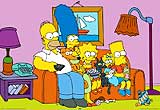 The longest-running, prime-time television cartoon series was The Simpsons - it premiered in December 1989 on the FOX channel. The iconic, culturally-significant animated show was created by Life in Hell cartoonist Matt Groening. An offshoot was their first feature length film, The Simpsons Movie (2007), starring the yellow-skinned, irreverent and misfit family featuring oafish father and nuclear plant manager Homer (voice of Dan Castellaneta), worrywart gravel-voiced, blue-haired mother Marge (voice of Julie Kavner), 10-year-old mischievous, troublemaker son Bart (voice of Nancy Cartwright), 8-year-old ecologically-minded, overachieving vegetarian Buddhist sister Lisa (voice of Yeardley Smith), and pacifier-sucking toddler Maggie.
Groening was also responsible for the science-fiction spoof Futurama that first aired in 1999 - a highly popular but less successful series set in the next millennium, starring "Generation-X" slacker Phillip J. Fry (voice of Billy West) - a 20th century NY pizza delivery boy who was cryogenically frozen by accident for 1,000 years, and woke up in a retro-futuristic world. It too was adapted into a feature-length film, Futurama: Bender's Big Score (2007), the first of a planned four films.
The Ultimate 3-D:
The decade of the 2000s saw advancements in 3D and an explosion of releases of both 3-D films and IMAX films. There were many varieties of 3-D, including Disney Digital 3D, Real D 3D, InTru3D, D-BOX, and IMAX 3D. And with many more theatres converted to the 3D format, that meant increased demand and bookings (and ticket prices) for 3D films. Would 3D be the future of filmmaking, a logical extension of CGI?
Disney's and Robert Zemeckis' Beowulf (2007) was released simultaneously in standard 2-D and non-Imax 3D versions and had the biggest 3-D rollout of any film in history (to date). Disney's and Zemeckis' 3-D A Christmas Carol (2009) was an adaptation of Dickens' 1843 classic story in which Jim Carrey played multiple roles, including old miser Scrooge (at different stages of his life) and the three Christmas ghosts; it was released in both Disney Digital 3-D and IMAX 3-D (it was the first Disney animated film released in this format).
The DreamWorks sci-fi spoof of 50s monster movies Monsters vs. Aliens (2009) was the first computer-animated feature film to be shot directly in stereoscopic 3-D -- dubbed the Ultimate 3-D. Previously, 3-D CGI films were made in a non 3-D version and then dimensionalized. The film was about the growth of Californian Susan Murphy (voice of Reese Witherspoon) who was hit by a meteor on her wedding day and grew to monstrous size (49 feet and 11 inches) and was named Ginormica.
 More 3D animated releases in the 2000s included: The Polar Express (2004), Chicken Little (2005), Monster House (2006), Meet the Robinsons (2007), Bolt (2008), Coraline (2009), Cloudy with a Chance of Meatballs (2009), Up (2009), Ice Age: Dawn of the Dinosaurs (2009), Disney's motion-capture A Christmas Carol (2009), James Cameron's and 20th Century Fox's science-fiction tale Avatar (2009), and Pixar's Toy Story 3 (2010) - to name just a few. Toy Story 3 (2010) quickly became the highest-grossing G-rated movie ever, and became the first 2010 release to cross $400 million in domestic gross box-office.
Older films were re-released in 3-D: The Nightmare Before Christmas 3D (2006, original 1993), Toy Story in 3D (2009, original 1995), and Toy Story 2 in 3D (2009, original 1999), and there were indications that the next phase of the 3-D Renaissance would be more 3D re-releases of classic blockbusters, such as Star Wars (1977), The Lord of the Rings (2001-2003), The Matrix (1999), Top Gun (1986), and Titanic (1997).
Wallace & Gromit Claymation and other Aardman Productions:
The British clay-animation studio Aardman Animations was most famous for the Wallace and Gromit series of 30-minute shorts with clay-animated characters, the first of which was A Grand Day Out (1989). Wallace was a befuddled, cheese-addicted Englishman inventor, with a silent, wily companion dog named Gromit. Before becoming recognized, Aardman produced by a series of popular television ads featuring singing California Raisins (named A.C., Red, Stretch and Bebop), along with claymation expert Will Vinton.
 Aardman's writer-director Nick Park was responsible for these hits: its first Oscar-winning Creature Comforts (1989) which examined how anthropomorphized zoo animals felt about being placed in confined locations. The thirty-minute mystery Wallace and Gromit - The Wrong Trousers (1993), its second Wallace and Gromit short, with a frantic toy-train finale - was the Academy Award winner for Best Animated Short Film. Likewise, Aardman's third half-hour short with Wallace and Gromit titled A Close Shave (1995) also won the Oscar for Best Animated Short Film.
And then along with DreamWorks, Aardman produced their first feature film - the remarkable prison-break parody Chicken Run (2000) about an imprisoned group of egg-laying chickens plotting an escape. Mel Gibson starred as a cocky Yankee rooster. Its denial of a Best Picture nomination led to the creation of the Best Animated Feature category - first available for eligible films in the year 2001. The horror spoof Wallace & Gromit: The Curse of the Were-Rabbit (2005) was the first feature-length film starring the pair, and the first stop-motion/'claymation' film to win the Best Animated Feature Academy Award.
The animated comedy Flushed Away (2006), was co-produced by Aardman Feature Films and DreamWorks Animation - it was Aardman Films' first completely CGI film about an aristocratic rat named Roddy (voice of Hugh Jackman) whose life was ruined by a low-brow ruffian rat named Sid (voice of Shane Richie). The film was originally to be stop-motion claymation, but due to the abundance of water effects, the entire film was transformed into CGI -- however, the characters still resembled Aardman's trademark plasticene characters.

 In the 60s through the 80s, Disney also released a second-tier of animated feature films, including the delightfully animated 101 Dalmatians (1961), The Sword in the Stone (1963), The Jungle Book (1967) - the last film that Walt personally worked on before his death in 1966, The Aristocats (1970), another live-action and animation feature Bedknobs and Broomsticks (1971) similar to Mary Poppins (1964), Robin Hood (1973), and The Rescuers (1977) (with Disney's first official animated sequel The Rescuers Down Under (1990)).
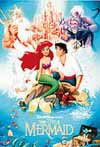 Disney Studios soon returned to the quality of its heyday of animation from the 30s and 40s with advanced, more mature animations in the late 80s and 90s, including the tale of the headstrong young mermaid Ariel in The Little Mermaid (1989). The popular and highly successful film won two Oscars (Best Score and Best Song: "Under the Sea"), and earned $84 million (domestic) and $211 million (worldwide) at the box-office. The film recharged Disney, and insured the revival of animated films, with three more increasingly stronger hits for the studio in the early 1990s:.
 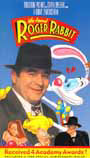 Another exceptional film (a coordinated effort released by Disney (Touchstone), produced by Steven Spielberg's Amblin, live-action directed by Robert Zemeckis, and animated by Richard Williams) was the Oscar-winning
 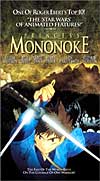 later works included Laputa: Castle in the Sky (1986), My Neighbor Totoro (1988), Kiki's Delivery Service (1989), Porco Rosso (1992) (translated as The Crimson Pig), and Whisper of the Heart (1995)
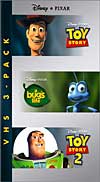 Pixar Animation Studios, originally a division of Lucasfilm (and Industrial Light and Magic (ILM)), was purchased by Apple Computer's Steve Jobs and made an independent company in 1986. [ILM had created the startling, first completely CGI-animated character - the 'stained-glass knight' in Young Sherlock Holmes (1985), bringing the film a Best Visual Effects nomination.]
  The year 1998 also showcased other animated films, including the low-budget Rugrats Movie (1998) (based upon the characters on Nickelodeon's TV series), Disney's hand-drawn animated Chinese folk tale Mulan (1998) (Disney's 36th feature-length animated film), and DreamWorks SKG's' epic - the animated musical feature The Prince of Egypt (1998) about the Hebrew Exodus from Egypt - and the most expensive classically-animated feature at the time, budgeted at $60 million.
 Bill (J. C.) Melendez, who first worked at Walt Disney Studios during the classic animated 40s era, then moved to Leon Schlesinger Cartoons (AKA Warner Brothers Cartoons) in 1942 at the time of the Disney strike, where he made a number of notable Looney Tunes cartoons. But his biggest success was his collaboration with comic-strip cartoonist Charles M. Schultz, and the making of the first animated Peanuts special on CBS-TV, the irreplaceable Christmas special A Charlie Brown Christmas (1965). Ultimately, he would be involved as director of about forty Charlie Brown TV specials after 1965, and the producer of a 1983 Saturday morning cartoon show called The Charlie Brown and Snoopy Show. He also 'acted' by providing the voices of Snoopy and Woodstock. [Jazz musician Vince Guaraldi scored the 1965 special and continued to score all the Charlie Brown television specials till his death in 1976. His distinctive scores were used on all subsequent specials, movies and TV series.]
 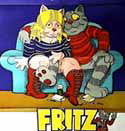 Normally, animations are regarded as an innocent, innocuous form of entertainment, even though iconoclastic writer/director Ralph Bakshi's, adults-only rated-X feature (in its original release) Fritz the Cat (1972), based upon cartoonist Robert Crumb's underground comics character, was the first X-rated animated feature in Hollywood history. It was also the first independent animated film to gross more than $100 million at the box office. The film featured a hippie-like, sex and drug-loving cat.
 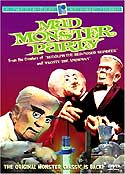 The team of Arthur Rankin-Jules Bass was most known for its holiday specials aired on television, such as the object-animated Rudolph the Red-Nosed Reindeer (1964) - with the voice of Burl Ives, Frosty the Snowman (1969) - with the voice of Jimmy Durante, and Santa Claus is Coming to Town (1970) - with voices of Fred Astaire, Mickey Rooney, and Keenan Wynn. They also created the parody-spoof of monster films, their only feature-length animated film titled Mad Monster Party? (1967), with characters based upon many of the Universal 'monsters' - including Frankenstein (voiced by Boris Karloff), Count Dracula, The Wolf Man, King Kong, The Mummy, Dr. Jekyll and Mr. Hyde, The Invisible Man, and The Creature from the Black Lagoon. The film used the stop-motion “animagic” process to animate the three-dimensional puppets. Two future Mad Magazine contributors, Harvey Kurtzman and Jack Davis, were responsible for co-writing the screenplay and design work. Reportedly, Tim Burton found this film to be extremely influential upon his own later work.
 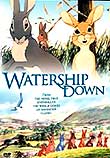 Watership Down (1978), a bleak, allegorical animated fantasy film, the most successful British animated feature of its time. It told about the desperate quest of a warren of rabbits to find a new home, led by heroic Hazel (voice of John Hurt), a small, nervous rabbit named Fiver (voice of Richard Briers), and courageous Bigwig (voice of Michael Graham Cox). In the anthropomorphized tale, they must escape the destruction of their land during the construction of a housing development, and join a rival warren named Efrafa led by a vicious militaristic dictator, General Woundwort (voice of Harry Andrews). The film also included the last involvement in a motion picture for legendary actor Zero Mostel who played the voice of the cantankerous seagull Kehaar.
 Star Wars (1977)
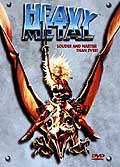 Gerald Potterton's uneven, multi-part anthology film Heavy Metal (1981) - based on the 70s fantasy, cyberpunk comic book of the same name, was heavy on adult-oriented content; it was produced by Ivan Reitman (who would soon become famous for directing
  Avery's first cartoon for MGM, the anti-German propagandist short Blitzwolf (1942) brought him his sole Oscar nomination. It was a wartime semi-parody of Disney's earlier Three Little Pigs (1933) with Adolf Wolf (a thinly-disguised Hitler, portrayed as "one big stinker") threatening to invade the state of Pigmania and the house of Sergeant Pork (US).
 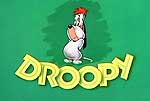 Besides Tom & Jerry (see below), the other biggest MGM cartoon character, Tex Avery's most famous and long-lasting at the studio, was the meek, slow-moving and slow-talking Droopy Dog. The emotionless, deadpan-voiced, yet stoic Droopy (known as "Happy Hound") made his nameless debut in MGM's Dumb-Hounded (1943). His first line of dialogue was: "Hello all you happy people...you know what? I'm the hero." He finally received his proper name in his fifth cartoon, Senor Droopy (1949). Drag-Along Droopy (1954) was one of the classic Droopy cartoons, a spoof on range wars between sheepherders (Droopy) and ranchers (the Wolf's "Bear Butte Ranch"), as was Dixieland Droopy (1954) - the first Droopy cartoon in Cinemascope. One Droopy Knight (1957) was nominated for an Academy Award - the character's sole nomination (after Avery left the studio).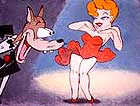
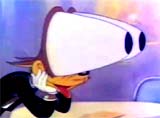 Later cartoons for MGM included Avery's controversially-sexy version of the well-known fairy tale Red Hot Riding Hood (1943) and Screwball Squirrel (1944). [Tex Avery's work heavily influenced director Chuck Russell's The Mask (1994) featuring Jim Carrey as mild-mannered bank clerk Stanley Ipkiss, who is obsessed with cartoons. When Stanley dons a magical mask, he turns into an alter ego composed of Tex Avery-like cartoon characters - the Wolf (including a famous double-take with his eyes popping out of his head and a wolf whistle), the Tasmanian Devil (whirling like a tornado), and others. He even re-enacts portions of a classic Avery cartoon that he earlier watched on his VCR, Red Hot Riding Hood (1943), in the nightclub scene. All special effects were compliments of George Lucas' Industrial Light and Magic.]
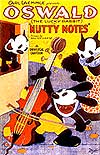 Walter Lantz, an early animator, and Charles Mintz (representing Universal and boss Carl Laemmle), took over the character Oswald the Lucky Rabbit from Walt Disney in 1928 - it was the first animated character for Universal Pictures. The resemblance of Oswald to its biggest competitor, Mickey Mouse, was striking. Lantz made a series of black-and-white cartoons from 1929 to 1935, featuring the rubber-limbed, long-eared rabbit, including these early titles: Ozzie of the Circus (1929), Stage Stunt (1929), Stripes and Stars (1929), Wicked West (1929), Nuts and Bolts (1929), Ice Man's Luck (1929), Junegle Jingles (1929), Weary Willies (1929), Saucy Sausages (1929), Race Riot (1929), Oil's Well (1929), Permanent Wave (1929), Cold Turkey (1929), Amature Nite (1929), Snow Use (1929), Hurdy Gurdy (1929), and Nutty Notes (1929). Mickey Rooney was the first to do the character's voice. Lantz was noted for also making the first-ever Technicolor cartoon - the opening animated sequence to the live-action The King of Jazz (1930).
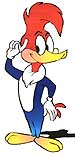 Another of Lantz' legendary creations was a new character - the red-headed, blue-bodied, long yellow-beaked, trouble-making Woody Woodpecker, with his distinctive trademarked laugh ("Ha-Ha-Ha-HA-Ha" by Mel Blanc) and voice (by Mel Blanc for the first four cartoons, and then by Ben "Bugs" Hardaway until 1948, and thereafter by Lantz' own wife Grace Stafford). Woody (looking slightly deranged and not like his later persona) first appeared in Lantz' Andy Panda cartoon Knock, Knock (1940) distributed by Universal Studios, in which he bedeviled the panda. The next year, the popular Woody became a starring character as "Woody Woodpecker" in The Cracked Nut (1941), and began to replace the waning Oswald the Rabbit.
 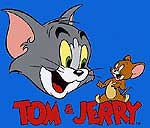 In their first full teaming together after first meeting at MGM and serving as co-directors in the studio's animation unit, William Hanna and Joseph Barbera created the cat and mouse Tom and Jerry series (clearly influenced by the frenetic action in Tex Avery's work at Warners), comic adventures about Tom - a gray mangy cat, and Jerry - a wisely innocent mouse. When the cartoon series highlighting the love-hate relationship between the two animals was first introduced in 1940 with the 9-minute Puss Gets the Boot (1940), Hanna and Barbera received their first Oscar nomination. In this first appearance of the characters, Tom was called 'Jasper' and the mouse had no name.
 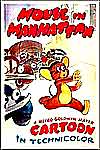 In The Cat Concerto (1946), Tom was a concert pianist, attempting to play Liszt's Hungarian Rhapsody No. 2 while Jerry the mouse was trying to sleep in the piano. And in the last film Johann Mouse (1952), Jerry - the mouse, can't resist waltzing when he hears music from the master of the house, Viennese composer Johann Strauss. Tom, also a resident in the household of the Maestro, takes piano lessons to keep Jerry dancing and entranced - so that he can snatch him. One of their most famous cartoons was Mouse in Manhattan (1945) that featured a score by Scott Bradley (made up mostly of Louis Alter's "Manhattan Serenade" later used in
 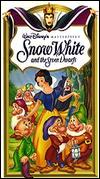 The earliest animated films that most people remember seeing are the later, more sophisticated Disney feature films that contain exquisite detail, flowing movements, gorgeous and rich color, enchanting characters, lovely musical songs and tunes, and stories drawn with magical or mythological plots. The first, full-length animated film was Disney's classic
 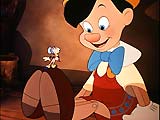 The Golden Age of Hollywood cartoon comedy was in the late 1930s and 1940s. The critically-praised Pinocchio (1940) released on February 7, 1940 and based on Carlo Collodi's 1881 fable made a record $2.6 million and became the highest-earning film of the year. This second Disney animated feature also won two Oscars, for Best Original Score and Best Song (When You Wish Upon a Star). It was the rites of passage story of a wooden puppet (with Tyrolean britches) that came alive. The delinquent boy was accompanied by an ingenuous narrator/carpetbagger named Jiminy Cricket who served as the boy's conscience (and sounded like Benjamin Franklin). The ingenious animation used the multi-plane camera technique to create an amazingly life-like animation.
 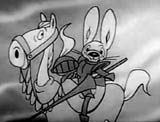 Animator Jay Ward, working with Alexander Anderson, Jr (whose idea was first turned down at Terrytoon Studios), created the immensely-popular animated, serialized NBC-TV show Crusader Rabbit, through their new company Television Arts Productions. It was the first American animated series produced especially for television. The show originally aired from 1950 -1952 and also had a color version in 1957, with both Lucille Bliss and GeGe Pearson providing the voice of the Don Quixote-like title character. It told about knight-in-armor Crusader Rabbit and his tiger companion Rags, combatting nemesis Dudley Nightshade, with episodes ending in a cliffhanger. Ward went on to produce animated cartoon shows, such as The Rocky and Bullwinkle Show - composed of Rocky and His Friends (1959-1961) and The Bullwinkle Show (1961-1964), Hoppity Hooper (1964-1967), George of the Jungle (1967), and The Dudley Do-Right Show (1969-1970) about a Canadian Mountie. The only live-action TV comedy show that he produced was Fractured Flickers (1963).
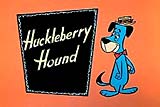 In the late 50s after their success with Tom and Jerry cartoons, Hanna-Barbera formed their own company. They were one of the earliest animation studios to become successful producing animated cartoon TV shows for television, but were often criticized for their crude, low-budget animations. They became responsible for the following cartoon shows, and their related spin-offs:
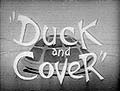 One of the most notorious propaganda films ever made, Duck and Cover (1951), was aimed at school children. The 9-minute Civil Defense film used an animated turtle named Bert to show children how to survive a nuclear explosion or atomic attack by using a "duck and cover" technique under their desks. Later, Bert became a cultural icon in the documentary The Atomic Cafe (1982), and it was cleverly spoofed in Brad Bird's The Iron Giant (1999) with a cartoon beaver. For its historical and cultural place within film history, it was inducted into the National Film Registry in 2004.
  Advanced Animation Techniques in the 50s and 60s: