Bill Melendez and the Peanuts Animations:
 Bill (J. C.) Melendez, who first worked at Walt Disney Studios during the classic animated 40s era, then moved to Leon Schlesinger Cartoons (AKA Warner Brothers Cartoons) in 1942 at the time of the Disney strike, where he made a number of notable Looney Tunes cartoons. But his biggest success was his collaboration with comic-strip cartoonist Charles M. Schultz, and the making of the first animated Peanuts special on CBS-TV, the irreplaceable Christmas special A Charlie Brown Christmas (1965). Ultimately, he would be involved as director of about forty Charlie Brown TV specials after 1965, and the producer of a 1983 Saturday morning cartoon show called The Charlie Brown and Snoopy Show. He also 'acted' by providing the voices of Snoopy and Woodstock. [Jazz musician Vince Guaraldi scored the 1965 special and continued to score all the Charlie Brown television specials till his death in 1976. His distinctive scores were used on all subsequent specials, movies and TV series.]
Melendez' feature-length film collaborations with Schultz included:
- A Boy Named Charlie Brown (1969) - this was the first full-length animated film starring the Peanuts gang; it contained Vince Guaraldi's classic Oscar-nominated score (that featured lyrics by Rod McKuen)
- Snoopy, Come Home (1972) - often considered the best feature-length Peanuts film, featured the first appearance of Woodstock (named after the famous rock-music festival in 1969)
- Race For Your Life, Charlie Brown (1977)
- Bon Voyage, Charlie Brown (and Don't Come Back!) (1980) - its sequel was a 23-minute TV special tribute to US veteran soldiers of WWII titled What Have We Learned, Charlie Brown? (1983), a Peabody Award winner
A stage version of the Peanuts comic strip, You're a Good Man, Charlie Brown, first appeared in 1967 in an off-Broadway Greenwich Village theatre, and remained for four years. The show was later revived on Broadway in 1999 for a short run, and won two Tony Awards. Melendez also directed the Emmy Award-winner for Outstanding Animated Program for PBS-TV's special The Lion, Witch, and the Wardrobe (1979) which was co-produced by the Children's Television Workshop (famed for two TV series, Sesame Street and The Electric Company). It was based upon the first story of C.S. Lewis' classic children's tales series, Chronicles of Narnia, and it was the first full-length animated feature film created directly for television's small screen. It was broadcast over two nights in April 1979 on US television.
Adults-Rated Animations in the 70s and After: Ralph Bakshi
 Normally, animations are regarded as an innocent, innocuous form of entertainment, even though iconoclastic writer/director Ralph Bakshi's, adults-only rated-X feature (in its original release) Fritz the Cat (1972), based upon cartoonist Robert Crumb's underground comics character, was the first X-rated animated feature in Hollywood history. It was also the first independent animated film to gross more than $100 million at the box office. The film featured a hippie-like, sex and drug-loving cat.
Writer/director Bakshi's next X-rated animated feature (later re-cut and re-released with an R-rating) was the violent, gritty and misogynistic Heavy Traffic (1973), a semi-autobiographical tale about a misfit comic-book cartoonist that was loosely adapted from Hubert Selby's novel Last Exit to Brooklyn. It blended together animated and live-action sequences in its urban scenes, and also layered old film clips into cartoon backgrounds. The animation auteur also released the controversial Coonskin (1975) (aka Street Fight) that was accused of being racist and offensive. It contained urban-oriented, politically-oriented blaxploitation content about a rabbit that ruled the streets of Harlem.
The surrealistic animator Bakshi also directed the animated cult film Wizards (1977) - a tale of good vs. evil and a test run for his next animation - The Lord of the Rings (1978). This latter film had an adapted screenplay co-written by Peter Beagle (based, although incompletely, upon books in J.R.R. Tolkien's trilogy), and was noted for its extensive use of the animation technique of rotoscoping, in which human actors were filmed and 'traced' as cartoon characters. [Tolkien’s earlier introductory work The Hobbit (1937) was filmed as an hour-long (78-minute) animated TV movie (broadcast in late November 1977) by the team of Arthur Rankin Jr.-Jules Bass in 1977 as The Hobbit (1977). Voices for the characters were: Orson Bean (the hobbit Bilbo Baggins), John Huston (the wizard Gandalf), Otto Preminger (Elvenking), Richard Boone (Smaug), Hans Conreid (Thorin), and Brother Theodore (Gollum). Rankin-Bass also concluded the story in the animated TV film The Return of the King (1979).]
Bakshi also released the not-for-children sword-and-scorcery animated Fire and Ice (1983), with work by fantasy design artist Frank Frazetta. (Bakshi also directed various dark and psychedelic-flavored episodes of the Spider-Man cartoon series on ABC-TV beginning in its second season in the late 1960s.) One of his later works was the Paramount studio-financed, poorly-received Cool World (1992), containing a plot with similarities to the parallel animated Toon World in Who Framed Roger Rabbit (1988). It also raised the intriguing question of whether a live-action person could have sex with a cartoon character, and featured Brad Pitt as the voice of a Las Vegas cop, and Kim Basinger as cartoon sex symbol creation Holli Would, who wished to become a 'noid' in the human world.
Rankin-Bass:
 The team of Arthur Rankin-Jules Bass was most known for its holiday specials aired on television, such as the object-animated Rudolph the Red-Nosed Reindeer (1964) - with the voice of Burl Ives, Frosty the Snowman (1969) - with the voice of Jimmy Durante, and Santa Claus is Coming to Town (1970) - with voices of Fred Astaire, Mickey Rooney, and Keenan Wynn. They also created the parody-spoof of monster films, their only feature-length animated film titled Mad Monster Party? (1967), with characters based upon many of the Universal 'monsters' - including Frankenstein (voiced by Boris Karloff), Count Dracula, The Wolf Man, King Kong, The Mummy, Dr. Jekyll and Mr. Hyde, The Invisible Man, and The Creature from the Black Lagoon. The film used the stop-motion “animagic” process to animate the three-dimensional puppets. Two future Mad Magazine contributors, Harvey Kurtzman and Jack Davis, were responsible for co-writing the screenplay and design work. Reportedly, Tim Burton found this film to be extremely influential upon his own later work.
Also, the team of Rankin-Bass produced the anime-like mythological tale The Last Unicorn (1982). It was a sophisticated story from a screenplay by children's book novelist Peter Beagle about a lonely, last-remaining unicorn (voice of Mia Farrow) who set out on a quest to confront a beast of fire named Red Bull that had eliminated all the other unicorns.
Other Exceptional Animations with Mature Subject Matter in the Late 70s-Early 80s:
Nepenthe Productions and writer/director Martin Rosen (and animator Tony Guy) made two dark films with mature (serious-minded) subject matter - both based on Richard Adams' best-selling novels about animals and ecological concerns:
 Watership Down (1978), a bleak, allegorical animated fantasy film, the most successful British animated feature of its time. It told about the desperate quest of a warren of rabbits to find a new home, led by heroic Hazel (voice of John Hurt), a small, nervous rabbit named Fiver (voice of Richard Briers), and courageous Bigwig (voice of Michael Graham Cox). In the anthropomorphized tale, they must escape the destruction of their land during the construction of a housing development, and join a rival warren named Efrafa led by a vicious militaristic dictator, General Woundwort (voice of Harry Andrews). The film also included the last involvement in a motion picture for legendary actor Zero Mostel who played the voice of the cantankerous seagull Kehaar.
- The Plague Dogs (1982), the even darker, far more nihilistic, pro-animal rights film about two abused laboratory experiment dogs, a cynical, bitter black Labrador named Rowf (voice by Christopher Benjamin) and a brown and white dog named Snitter (voice of John Hurt). Both escape from captivity in a secret British government research lab (Animal Research, Surgical and Experimental) and become fugitives. While on the run, it is falsely reported and suspected that they carry the deadly bubonic plague and they are relentlessly pursued.
- the Adams' stories of the rabbits of Watership Down were retold in a short-lived animated TV series, produced by Rosen - 3 series of episodes aired beginning in 1999; with title music by Andrew Lloyd Webber
The French/Czech-made, science-fiction oriented Fantastic Planet (1973, Fr.) (aka La Planète Sauvage) possessed similarities to Fritz Lang's Metropolis (1927) with its two-tiered society on a faraway planet of Ygam, consisting of enslaved humanoids called Oms and a ruling class of bizarre, blue-skinned alien giants named Traags. It was based upon the popular French newspaper serial (Stefan Wul's Oms en Serie ("Oms by the Dozen")), and was lauded with the Cannes Film Festival's special jury prize, the Grand Prix, when it was first released. Its animation technique was to move paper cutouts across backgrounds.
The inventive animated fantasy Twice Upon a Time (1983), executive produced by George Lucas, told a story about two heroes and their friends who tried to prevent a maniacal madman from giving children nightmares. It used the same cut-out paper animation that South Park: Bigger, Longer & Uncut (1999), the most profane animated film (with 399 swear-words) would also later employ.
The Stop-Motion Animation Work of Phil Tippett:
One of stop-motion animation pioneer Ray Harryhausen's animators was Phil Tippett, who followed in his mentor's footsteps with work on the following fantasy films, often for LucasFilms and Industrial Light & Magic (ILM):  Star Wars (1977) especially in the chess-game sequence, The Empire Strikes Back (1980) in the early Hoth snow battle sequence, the fantasy adventure Dragonslayer (1981) introducing the innovative, more fluid stop-motion filming technique of go-motion, Return of the Jedi (1983), director Steven Spielberg's Indiana Jones and the Temple of Doom (1984) in the mine car chase sequence, The Golden Child (1986), Howard the Duck (1986), RoboCop (1987) with its two-footed experimental enforcer robot ED209, Willow (1988), Jurassic Park (1993), and Starship Troopers (1997).
Rock-Oriented Animation Favorites:
Other pioneering animations in the early 80s relied heavily on rock music, adult themes of sex and violence, and capitalized on the post- Star Wars (1977) sci-fi fantasy boom. They have since become cult favorites for midnight movie fans:
 Gerald Potterton's uneven, multi-part anthology film Heavy Metal (1981) - based on the 70s fantasy, cyberpunk comic book of the same name, was heavy on adult-oriented content; it was produced by Ivan Reitman (who would soon become famous for directing Ghostbusters (1984)), and one of the stories was contributed by Dan O'Bannon - the screenwriter for Alien (1979); a midnight screening favorite, it featured hallucinatory images and a heavy rock soundtrack by performers Black Sabbath, Blue Oyster Cult, Nazareth, Cheap Trick, Devo, and Grand Funk Railroad [Note: a computer-generated and cel animated sequel that went direct-to-cable TV, Heavy Metal 2000 (2000), featured a tough, buxom heroine named FAKK 2 (who was based upon the B-movie queen Julie Strain), frequent glimpses of cartoon nudity, and a heavy metal soundtrack by Pantera, Monster Magnet, MDFMK, Insane Clown Posse, Billy Idol, Bauhaus and others]
- Clive Smith's post-apocalyptic animated musical fantasy Rock & Rule (1983) - told about an aging R&R singer named Mok (voice of Don Francks) who searches for eternal life; other voices included singer Lou Reed, Iggy Pop, Robin Zander of Cheap Trick, and Deborah Harry of Blondie; [Smith's company Nelvana had earlier produced a 27-minute short The Devil and Daniel Mouse (1978)]
- Gerald Scarfe's animation in the anti-authoritarian, anti-war Pink Floyd the Wall (1982) presented deeply adult content (on the subjects of sex, drugs, rock and roll, and violence) and psychosexual Freudian imagery
Early Claymation and Gumby:
Claymation is a type of animation that uses hand-crafted, sculpted plasticine or clay. This form of stop-motion animation was first associated with director Art Clokey's clay-hero character named Gumby for children's TV - a slant-headed bendable figure. (Clokey filmed the animated motion study Gumbasia at USC in the early 1950s. Gumby shorts were inaugurated in the mid-1950s - and the character first debuted on The Howdy Doody Show in 1956.)
Early on, the technique of claymation was mostly associated with the directorial work of Will Vinton, most recognized for his work on the TV commercial about California Raisins in the late 80s. He was the co-director of the first Claymation film, Closed Mondays (1974), which won the Best Animated Short Film Oscar award. His work was evidenced in the first full-length feature film showcasing claymation titled The Adventures of Mark Twain (1985) (aka Comet Quest), a biography of the US humorist derived from Twain's own Huckleberry Finn sequel Tom Sawyer Abroad. James Whitmore provided the voice of the title character on a transcontinental, riverboat balloon journey to find Haley's Comet. Twain's classic tales were featured in various segments, such as "The Celebrated Jumping Frog of Calaveras County" and "The Mysterious Stranger". The Vinton studio also provided claymation effects for the live-action fantasy Return to Oz (1985).

 Avery's first cartoon for MGM, the anti-German propagandist short Blitzwolf (1942) brought him his sole Oscar nomination. It was a wartime semi-parody of Disney's earlier Three Little Pigs (1933) with Adolf Wolf (a thinly-disguised Hitler, portrayed as "one big stinker") threatening to invade the state of Pigmania and the house of Sergeant Pork (US).
  Besides Tom & Jerry (see below), the other biggest MGM cartoon character, Tex Avery's most famous and long-lasting at the studio, was the meek, slow-moving and slow-talking Droopy Dog. The emotionless, deadpan-voiced, yet stoic Droopy (known as "Happy Hound") made his nameless debut in MGM's Dumb-Hounded (1943). His first line of dialogue was: "Hello all you happy people...you know what? I'm the hero." He finally received his proper name in his fifth cartoon, Senor Droopy (1949). Drag-Along Droopy (1954) was one of the classic Droopy cartoons, a spoof on range wars between sheepherders (Droopy) and ranchers (the Wolf's "Bear Butte Ranch"), as was Dixieland Droopy (1954) - the first Droopy cartoon in Cinemascope. One Droopy Knight (1957) was nominated for an Academy Award - the character's sole nomination (after Avery left the studio).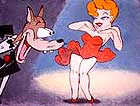
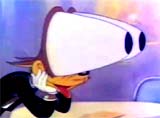 Later cartoons for MGM included Avery's controversially-sexy version of the well-known fairy tale Red Hot Riding Hood (1943) and Screwball Squirrel (1944). [Tex Avery's work heavily influenced director Chuck Russell's The Mask (1994) featuring Jim Carrey as mild-mannered bank clerk Stanley Ipkiss, who is obsessed with cartoons. When Stanley dons a magical mask, he turns into an alter ego composed of Tex Avery-like cartoon characters - the Wolf (including a famous double-take with his eyes popping out of his head and a wolf whistle), the Tasmanian Devil (whirling like a tornado), and others. He even re-enacts portions of a classic Avery cartoon that he earlier watched on his VCR, Red Hot Riding Hood (1943), in the nightclub scene. All special effects were compliments of George Lucas' Industrial Light and Magic.]
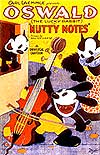 Walter Lantz, an early animator, and Charles Mintz (representing Universal and boss Carl Laemmle), took over the character Oswald the Lucky Rabbit from Walt Disney in 1928 - it was the first animated character for Universal Pictures. The resemblance of Oswald to its biggest competitor, Mickey Mouse, was striking. Lantz made a series of black-and-white cartoons from 1929 to 1935, featuring the rubber-limbed, long-eared rabbit, including these early titles: Ozzie of the Circus (1929), Stage Stunt (1929), Stripes and Stars (1929), Wicked West (1929), Nuts and Bolts (1929), Ice Man's Luck (1929), Junegle Jingles (1929), Weary Willies (1929), Saucy Sausages (1929), Race Riot (1929), Oil's Well (1929), Permanent Wave (1929), Cold Turkey (1929), Amature Nite (1929), Snow Use (1929), Hurdy Gurdy (1929), and Nutty Notes (1929). Mickey Rooney was the first to do the character's voice. Lantz was noted for also making the first-ever Technicolor cartoon - the opening animated sequence to the live-action The King of Jazz (1930).
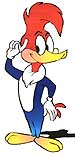 Another of Lantz' legendary creations was a new character - the red-headed, blue-bodied, long yellow-beaked, trouble-making Woody Woodpecker, with his distinctive trademarked laugh ("Ha-Ha-Ha-HA-Ha" by Mel Blanc) and voice (by Mel Blanc for the first four cartoons, and then by Ben "Bugs" Hardaway until 1948, and thereafter by Lantz' own wife Grace Stafford). Woody (looking slightly deranged and not like his later persona) first appeared in Lantz' Andy Panda cartoon Knock, Knock (1940) distributed by Universal Studios, in which he bedeviled the panda. The next year, the popular Woody became a starring character as "Woody Woodpecker" in The Cracked Nut (1941), and began to replace the waning Oswald the Rabbit.
 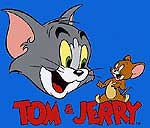 In their first full teaming together after first meeting at MGM and serving as co-directors in the studio's animation unit, William Hanna and Joseph Barbera created the cat and mouse Tom and Jerry series (clearly influenced by the frenetic action in Tex Avery's work at Warners), comic adventures about Tom - a gray mangy cat, and Jerry - a wisely innocent mouse. When the cartoon series highlighting the love-hate relationship between the two animals was first introduced in 1940 with the 9-minute Puss Gets the Boot (1940), Hanna and Barbera received their first Oscar nomination. In this first appearance of the characters, Tom was called 'Jasper' and the mouse had no name.
  In The Cat Concerto (1946), Tom was a concert pianist, attempting to play Liszt's Hungarian Rhapsody No. 2 while Jerry the mouse was trying to sleep in the piano. And in the last film Johann Mouse (1952), Jerry - the mouse, can't resist waltzing when he hears music from the master of the house, Viennese composer Johann Strauss. Tom, also a resident in the household of the Maestro, takes piano lessons to keep Jerry dancing and entranced - so that he can snatch him. One of their most famous cartoons was Mouse in Manhattan (1945) that featured a score by Scott Bradley (made up mostly of Louis Alter's "Manhattan Serenade" later used in
  The earliest animated films that most people remember seeing are the later, more sophisticated Disney feature films that contain exquisite detail, flowing movements, gorgeous and rich color, enchanting characters, lovely musical songs and tunes, and stories drawn with magical or mythological plots. The first, full-length animated film was Disney's classic
 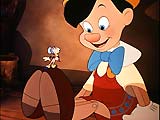 The Golden Age of Hollywood cartoon comedy was in the late 1930s and 1940s. The critically-praised Pinocchio (1940) released on February 7, 1940 and based on Carlo Collodi's 1881 fable made a record $2.6 million and became the highest-earning film of the year. This second Disney animated feature also won two Oscars, for Best Original Score and Best Song (When You Wish Upon a Star). It was the rites of passage story of a wooden puppet (with Tyrolean britches) that came alive. The delinquent boy was accompanied by an ingenuous narrator/carpetbagger named Jiminy Cricket who served as the boy's conscience (and sounded like Benjamin Franklin). The ingenious animation used the multi-plane camera technique to create an amazingly life-like animation.
 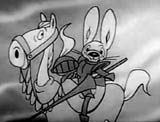 Animator Jay Ward, working with Alexander Anderson, Jr (whose idea was first turned down at Terrytoon Studios), created the immensely-popular animated, serialized NBC-TV show Crusader Rabbit, through their new company Television Arts Productions. It was the first American animated series produced especially for television. The show originally aired from 1950 -1952 and also had a color version in 1957, with both Lucille Bliss and GeGe Pearson providing the voice of the Don Quixote-like title character. It told about knight-in-armor Crusader Rabbit and his tiger companion Rags, combatting nemesis Dudley Nightshade, with episodes ending in a cliffhanger. Ward went on to produce animated cartoon shows, such as The Rocky and Bullwinkle Show - composed of Rocky and His Friends (1959-1961) and The Bullwinkle Show (1961-1964), Hoppity Hooper (1964-1967), George of the Jungle (1967), and The Dudley Do-Right Show (1969-1970) about a Canadian Mountie. The only live-action TV comedy show that he produced was Fractured Flickers (1963).
 In the late 50s after their success with Tom and Jerry cartoons, Hanna-Barbera formed their own company. They were one of the earliest animation studios to become successful producing animated cartoon TV shows for television, but were often criticized for their crude, low-budget animations. They became responsible for the following cartoon shows, and their related spin-offs:
 One of the most notorious propaganda films ever made, Duck and Cover (1951), was aimed at school children. The 9-minute Civil Defense film used an animated turtle named Bert to show children how to survive a nuclear explosion or atomic attack by using a "duck and cover" technique under their desks. Later, Bert became a cultural icon in the documentary The Atomic Cafe (1982), and it was cleverly spoofed in Brad Bird's The Iron Giant (1999) with a cartoon beaver. For its historical and cultural place within film history, it was inducted into the National Film Registry in 2004.
  Advanced Animation Techniques in the 50s and 60s:
 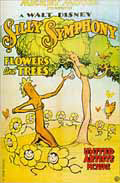 Disney's first fairy-tale adaptation was the Silly Symphony's title Babes in the Woods (1932), based upon the Hansel and Gretel story by the Brothers Grimm. The first animation in full three-color Technicolor was the 29th of Disney's short Silly Symphonies: Flowers and Trees (1932) with anthropomorphic characters - it produced Disney's first Academy Award, the first of Walt's 32 personal Academy Awards. The popular, influential Depression-Era fable The Three Little Pigs (1933) was released in 1933 with its optimistic hit theme song: "Who's Afraid of the Big Bad Wolf?" (based upon the tune of Happy Birthday) that became a Depression-era anthem. It was one of the earliest films displaying 'personality animation' - each of the three pigs had a distinctive personality.
 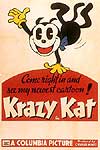 The character of Krazy Kat was featured in a long-running series of black and white cartoons produced by Columbia Pictures Corp. beginning in 1929 through to 1935 (in 1935 they became Technicolored), although the cartoon Kat had already been established as early as 1916 by International Film Service, Inc. with their Introducing Krazy Kat and Ignatz Mouse (1916). The first Krazy Kat cartoon was Ratskin (1929), followed by Canned Music (1929).
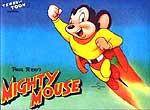 The most famous and valuable cartoon character from TerryToons was Mighty Mouse, a Superman-like mouse superhero that first debuted as a prototype "SuperMouse" in the short The Mouse of Tomorrow (1942). In a couple of years, the more recognizable Mighty Mouse was born and renamed in an appearance in The Champion of Justice (1944). He became known for his yellow costume, red cape, and his anthem song, with the words "Here I come to save the day!" Later, CBS-TV took the Mighty Mouse cartoons and packaged them into a very popular Saturday morning television show called Mighty Mouse Playhouse, beginning in 1955 and lasting for a record eleven years. Mighty Mouse was the first cartoon character ever to appear on Saturday mornings.
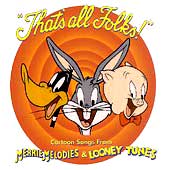
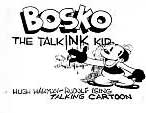 Warners' producer of cartoons, Leon Schlesinger (from 1930-1944) released a 5-minute pilot film named Bosko The TalkInk Kid (1929) - the first synchronized talking animated short/cartoon (as opposed to a cartoon with a soundtrack), with a little black boy character named Bosko who actually spoke dialogue. [The character of Bosko slightly resembled its major competitor at the time - Disney's Mickey Mouse, and many of the studios also had similar characters, such as Lantz' Oswald the Lucky Rabbit (see below), or Columbia's Krazy Kat.] At the end of the cartoon, Bosko went back into the inkwell and said, "So long, folks!" - the origination of the famous "That's all, folks!" end title. The Bosko pilot was drawn by two ex-Disney animators -- Hugh Harman (1903-1982) and Rudolf Ising (1903-1992), who began to make the first cartoons for Warner Bros.
  The Bosko film was the impetus for the birth of Warners Bros.' Looney Tunes (see more below)
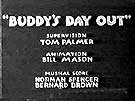 From 1933-1935 , producer Leon Schlesinger began assembling more staff for Warners, including Bob Clampett and Disney animator Jack King (famous for The Three Little Pigs) to begin creating the official Looney Tunes series. The first Looney Tune was Buddy's Day Out (1933), featuring a Bosko-like character (subsequent Looney Tunes were just a series of Buddy pictures), and the first color (Cinecolor) WB Merrie Melodie was Honeymoon Hotel (1934).
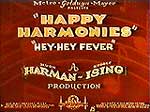 Meanwhile, at MGM by 1934, Hugh Harman and Rudolf Ising created the Happy Harmonies series of cartoons, eventually producing a total of 36 films by 1938. The first few in the series were:
 From 1935 onward until the early 40s, Warner's director of animation Fred 'Tex' Avery (who was recruited from Lantz, see more below), was responsible for much of the manic, satirical, absurdist, extra-violent, crude characters and corny gags and slapstick of numerous productions. Avery's animations, often designed for adult audiences, were often noted for 'pushing the envelope' of acceptable taste. Their first animated star was Porky Pig (see Bob Clampett below). Avery's first WB cartoon was Gold Diggers of '49 (1935) starring Porky Pig.
 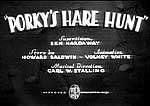 Daffy Duck's first appearance was in Avery's Porky's Duck Hunt (1937), remade the next year as Porky's Hare Hunt (1938). The name Daffy Duck (derived from the name of famed baseball player Dizzy Dean's brother Daffy) was used for the first time in the title of Avery's second duck-hunt picture Daffy Duck and Egghead (1938) - this was also the first Daffy Duck cartoon in color. [Egghead was the prototype for the character of Elmer Fudd.] (Through most of these years, voice artist Mel Blanc provided the voice for all the starring WB characters: Bugs Bunny, Sylvester, Porky Pig, Daffy Duck, Speedy Gonzalez, and many others.)
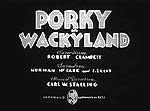 One of his most famous cartoons was Porky in Wackyland (1938), with the character of Porky hunting the last elusive and zany Do-Do bird in Wackyland, populated with surrealistic, Salvador Dali-inspired characters. The cartoon was remade eleven years later (in color) as Dough For The Do-Do (1949). [Later in Clampett's career, he received three Emmy awards for one of television's first daily live puppet shows, Time for Beany.]
 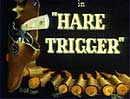 Freleng also introduced the characters of hot-tempered Yosemite Sam (who first appeared in Hare Trigger (1945)) and Speedy Gonzales (who appeared redesigned in Freleng's Speedy Gonzales (1955)), and brought lisping cat Sylvester (known for his trademark: "Thufferin' Thuccotash!") and yellow Tweety (Bird) (with the trademark: "I tawt I taw a puddy tat!") together in a series of Friz Freleng-directed films from 1947-1964. Their first film together (in which Sylvester was called "Thomas") was Tweetie Pie (1947) - it brought the Warner Bros. cartoon department its first Academy Award. [Sylvester's first film was Life With Feathers (1945), while Tweety Pie preceded the feline predator and first appeared in A Tale of Two Kitties (1942), but was named Orson.]
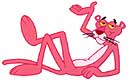 Friz Freleng (and David DePatie) also created the cool, bluesy 'The Pink Panther' animation with a pink feline character for the opening credits of The Pink Panther (1963). The first of a series of theatrical cartoons based upon the pink character was titled The Pink Phink (1964), and it won an Oscar for Best Animated Short Subject. In 1969, he successfully transitioned the character to television as The Pink Panther Show. One of his most famous cartoons was a jazzy version of the original The Three Little Pigs titled Three Little Bops (1957). Freleng won several Oscars over the years, for the films Tweety Pie (1947), Speedy Gonzalez (1955), Birds Anonymous (1957), and Knighty Knight Bugs (1958).
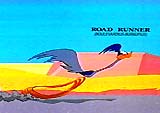 He also created the Road Runner series with Road Runner ("Meep, Meep" or "Beep, Beep") (known as Accelerati Incredibulis) and Wile E. Coyote (known as Carnivarious Vulgaris), debuting together in Fast and Furry-ous (1949). The setting for the cartoons was always the American Southwest, with the hapless Coyote devising various vain schemes to catch the non-combative, speedy Roadrunner - who zoomed along the winding roads through the desert. Intended to be a one-time only appearance, their popularity called for another cartoon produced 3 years later, Beep, Beep (1952), and then a series of cartoons for many years.
 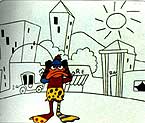 The comic Warner Bros.' Merrie Melodies masterpiece Duck Amuck (1953), inducted into the
 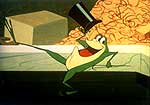 Another of Jones' most famous cartoons was the renowned One Froggy Evening (1955) - about a singing/dancing frog (in retrospect named Michigan J. Frog) who was unearthed from a condemned building's cornerstone. A construction worker - who pursued a fortune with the talented croaker, was dismayed when the Frog would only perform for him and not for an audience or talent agency. The cartoon was noted for a lack of spoken dialogue, and a rich collection of ragtime era songs - Steven Spielberg once noted that it was "the
 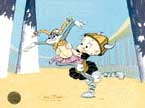 An additional Jones' masterpiece was the 7-minute parody What's Opera, Doc? (1957) - featuring Bugs' nemesis Elmer Fudd (as a Teutonic warrior-knight), a cross-dressed Bugs Bunny (as "Brunhilda"), and music from Richard Wagner's 18-hour opera Der Ring des Nibelungen. In 1992, What's Opera, Doc? became the first-ever animated film to be inducted into the
 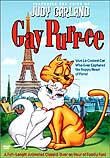 Jones also contributed script and character designs to UPA's Gay Purr-ee (1962), one of the last animations produced by the innovative studio. Similar to Disney's Lady and the Tramp (1955) (and Disney's later effort The Aristocats (1970)) and The Wizard of Oz adventure tale about a country girl, this full-length animated classic featured the voices of Judy Garland (as young feline heroine Mewsette who set off for Paris in the Gay 90s), Robert Goulet (as country bumpkin beau, Jaune-Tom in pursuit), and Hermione Gingold (as cathouse manager Madame Rubens-Chatte), and original songs by Wizard of Oz composers Harold Arlen and E.Y. (Yip) Harburg.
 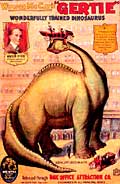 New York Herald comic-strip animator and sketch artist Winsor McCay (1869-1934) produced a string of comic strips from 1904-1911, his three best being Dreams of the Rarebit Fiend, Little Sammy Sneeze, and Little Nemo in Slumberland (from October 15, 1905 to July 23, 1911). Although McCay wasn't the first to create a cartoon animation, he nonetheless helped to define the new industry. He was the first to establish the technical method of animating graphics. His first animation attempt used the popular characters from his comic strip (and became part of his own vaudeville act): Little Nemo in Slumberland (1911) (with 4,000 hand-drawn frames), followed by How a Mosquito Operates (1912) (with 6,000 frames).
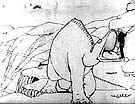 His first prominent, successful and realistic cartoon character or star was a brontosaurus named Gertie in Gertie the Dinosaur (1914) (with 10,000 drawings, backgrounds included), again presented as part of his act. In fact, McCay created the "interactive" illusion of walking into the animation by first disappearing behind the screen, reappearing on-screen!, stepping on Gertie's mouth, and then climbing onto Gertie's back for a ride - an astonishing feat! It was the earliest example of combined 'live action' and animation, and the first "interactive" animated cartoon. Some consider it the first successful, fully animated cartoon - it premiered in February 1914 at the Palace Theatre in Chicago.
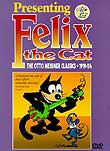 The first animated character that attained superstar status (and was anthropomorphic) during the silent era was the mischievous Felix the Cat, in Pat Sullivan Studios. He was inspired by Kipling's The Cat That Walked By Himself in the Just So Stories published in 1902.
 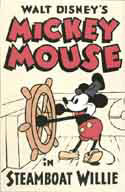 The Debut of Mickey Mouse:
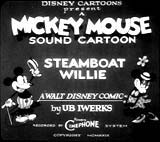 To help make Mickey stand out from other cartoon characters at the dawn of the talkies, the 7-minute Steamboat Willie (1928) was re-released on November 18, 1928 with sound and premiered at the 79th Street Colony Theatre in New York - it was the first cartoon with post-produced synchronized soundtrack (of music, dialogue, and sound effects) and is considered Mickey Mouse's screen debut performance and birthdate. Animated star Mickey (with Minnie) was redrawn with shoes and white, four-fingered gloves. [The character was a take-off based upon Buster Keaton's
 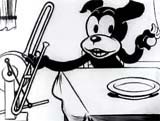 The Fleischer Brothers also made the first animated films (cartoons) that featured a soundtrack, in a series of 36 films released in the mid-1920s called Ko-Ko Song Car-Tunes (1924-1927) - the precursors to karaoke. The first sound cartoon was one of the Song Car-Tunes -- Mother Pin a Rose on Me. They were also the first audience participation films, with sing-along lyrics and a 'bouncing-ball' helper. They included Has Anybody Here Seen Kelly? (1926), When The Midnight Choo-Choo Leaves For Alabam' (1926), Comin' Tho' The Rye (1926), Margie (1926), My Old Kentucky Home (1926), Tramp, Tramp, Tramp-The Boys Are Marching (1927), By The Light Of The Silvery Moon (1927).
 [Little-known fact: Max Fleischer was the father of Richard Fleischer, the director of Disney's 20,000 Leagues Under the Sea (1954), Fantastic Voyage (1966), Doctor Dolittle (1967) and Soylent Green (1973).]
 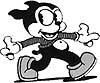 Bimbo
Bimbo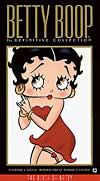 Max Fleischer was responsible for the provocative, adult-oriented, cartoon Betty Boop vamp-character, who always wore a strapless, thigh-high gown (and visible garter) and was based on flapper icon Clara Bow's 'It' Girl and Mae West. A prototype of the squeaky- and baby-voiced cartoon queen (voiced for most of the 30s by Mae Questel) was introduced in a Bimbo Talkartoon entitled Dizzy Dishes (1930) - with her appearing as a long-eared puppy dog! In the early cartoon Betty Co-Ed (1931), she was called Betty, and in a pre-Code Bimbo cartoon entitled Silly Scandals (1931) (the title spoofed Disney's Silly Symphonies), she was named Betty Boop for the first time (she sings You're Driving Me Crazy while her dress top keeps falling down). However, in Stopping the Show (1932), she appeared under her own credits banner for the first time (she had previously appeared only in Talkartoons and Screen Songs).
 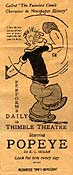 The Fleischers also obtained the rights to the tough, one-eyed, spinach-loving sailor Popeye with over-sized arms (who was introduced in January 1929 in creator Elzie C. Segar's "Thimble Theatre" newspaper comic strip published in the New York Journal for King Features Syndicate since 1919). Popeye became so popular in the comic strip that it was renamed "Thimble Theatre, Starring Popeye." Popeye first appeared on film alongside established cartoon-star Betty Boop in July, 1933 in Fleischers' Betty Boop cartoon titled Popeye the Sailor (1933), in which they dance the hula. Popeye's voice was provided by William Costello (better known as Red Pepper Sam) from 1933-35. [After Costello was dismissed, Jack Mercer, who began his career as an artist at the cartoon studio, provided Popeye's voice and ad-libbed mutterings for the Fleischers until 1957, and various voices for the two Fleischer feature-length animations - see below.] The same year in September, the first official Popeye cartoon, I Yam What I Yam was released - the first in a long series of animated shorts. Popeye's first Technicolor cartoon was the two-reel special release Popeye the Sailor Meets Sindbad the Sailor (1936), noted for its experimental multi-plane 3-D backgrounds, and for being the first Fleischer cartoon to be nominated for an Academy Award - Best Short Subject - Cartoon. The cartoon character became well-known for his theme song (excerpt below):
 Dave and Max
 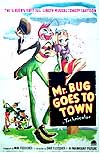 Gulliver's Travels (1939), an animated musical adaptation of Jonathan Swift's 1726 classic literary satire about war. The Fleischers, who were in direct competition with Disney, released this inferior attempt - it was the second American feature-length animated film ever, following (and patterned) after Disney's